Bad Recipes Number 1: Dilution Is For Suckers

This post begins my Bad Recipes series, an as-yet-unknown number of blog posts calling out bad essential oil practices that I find on the internet. Whoo boy, there are a lot of them. In the process of talking about the bad recipes and why they’re terrible, I’m hoping that I’ll be able to help my readers to understand good practices and safer use of essential oils.

So let’s dive in. As I was searching the internet for inspiration – not for this post, but for development of products for my business – I found a rather extensive post full of recipes for 10 milliliter rollerballs (small bottles with metal or plastic balls in the opening which allow you to apply the oils within directly to your skin, mess-free).

A standard 10ml rollerball bottle

There are several problems with the recipes, including that many of them use prepared blends (so you don’t necessarily know exactly what’s going into your blend) and that the oils she recommends are not from a brand that I trust, but the biggest problem, the one that blew my mind and made me curse out loud, was dilution.

Essential oils are powerful, concentrated plant substances. They all have different chemical compounds in them which give them different therapeutic properties, and which also give them all different safety considerations. Only a very few essential oils are safe to apply directly to your skin undiluted, and some need to be used very carefully indeed in order to prevent such things as allergic reactions, skin irritation, burning, or interactions with medications.

Proper dilution, therefore, is vital to safe use. A general guideline for healthy adults is 2% dilution (10 to 12 drops of essential oil per ounce of carrier oil like jojoba or sweet almond oil) for most issues, and 1% for emotional issues. A qualified aromatherapist may go higher than that for certain conditions, and it’s always good to go lower if it’s appropriate, but that’s a pretty decent baseline. For children under 10, a 1% dilution (5 to 6 drops per ounce) is the highest you want to go, and you don’t want to use essential oils on children under age 2 at all.

Please remember, these are powerful substances and each has its own safety considerations, so it’s better to err on the side of safety and take a “less is more” attitude toward essential oil use.

Now, back to those recipes I found. Rollerball bottles contain only 10 milliliters of oil, which is about a third of an ounce. For an adult, then, based on the dilution guideline I laid out above, you want no more than 3 or 4 drops of essential oil in each rollerball bottle.

These recipes, though. Good grief. These “recipes”. I scanned through them and almost choked.

One of these recipes calls for ninety drops of essential oil. NINETY. In ONE rollerball bottle. That’s absolutely, utterly, completely and in every way UNSAFE.

It’s irresponsible.

It’s wasteful.

It’s nuts.

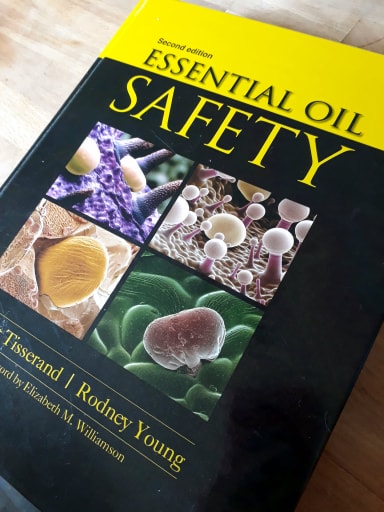
Seriously, it had me ready to throw my copy of Essential Oil Safety at the writer, but it’s the internet and all I would have accomplished is possibly irreparable damage to my computer screen.

Now wait, you may be saying. Are those oils the ones that you said can be applied neat, or directly to the skin without dilution? ‘Cause you definitely said that some could be.

I did say that. And no. No these are not. That particular recipe calls for THIRTY DROPS (my head explodes every time I think of this, for real) of lemongrass oil, which has some significant safety considerations, according to Tisserand (Tisserand and Young, 2014, Essential Oil Safety 2nd Edition) and is recommended not to be used at dilutions higher than 0.7%. That would be 1.4 drops per rollerball bottle.
I honestly don’t even bother putting this away any more unless Very Important Guests are coming over.

That’s right. Safe use of that oil would be 1 drop in the bottle, since it’s impossible to take a fraction of a drop and you’d have to round down. This recipe-writer is recommending THIRTY.

And that’s just one example. This page has 25 recipes on it, all of which are diluted at hugely inappropriate levels – by which I mean, they almost aren’t diluted at all.

One calls for 76 drops in the bottle, 18 of which are phototoxic and if worn in the sun could cause severe skin burns.

Another calls for 32 drops, 10 of which are wintergreen, which has similar safety concerns as aspirin – it interacts with anticoagulant drugs and should never be used on children under age 18 or women who are pregnant or breastfeeding.

You get the point.

So why am I writing this, other than to vent about something that is a pet peeve?

I want my readers to understand that a lot of what you find on the internet about essential oils is written by people who don’t know what they’re talking about, and that following their advice blindly can be unsafe. Educating yourself about essential oil best practices can ensure that the oils remain a safe and natural way to promote your family’s health, and that they don’t become a source of avoidable side effects that could have serious repercussions.

Please be wary.

(And yeah, I linked to that page so you could see what I’m talking about, but don’t use any of those recipes, okay? They’re BAD.)

GC/MS Reports: What Are They, And Why Should I care?

Every individual essential oil consists of many different chemical constituents, different molecules which in certain combinations create the scents that we know and love. Lavender oil, for example, has certain chemicals in it and not others, and we know what chemicals naturally occur in lavender and in what proportions. If there are other chemicals in there, or if the proportions are wrong, it isn’t lavender oil.

The formatted front page of a GC/MS report.

Unfortunately, you can’t tell what chemicals make up an oil just by smelling it or by looking at it. To keep with our example, lavender oil is one of the most frequently adulterated oils, with all sorts of things being put in there to tweak its scent or reduce its cost. The whole idea of the adulteration is to make it seem exactly the way the customer expects it to be, while maintaining a high profit margin. So adulterated lavender will probably look and smell just wonderful, even though it is not actually, chemically, lavender.

Remember, there are currently no laws or regulatory agencies ensuring that essential oils meet any kind of standards. None. It’s the Wild West up in here.

So how do you know that the oil you’re buying is actually lavender, with all its therapeutic properties and no extra safety considerations due to unknown mystery chemicals?

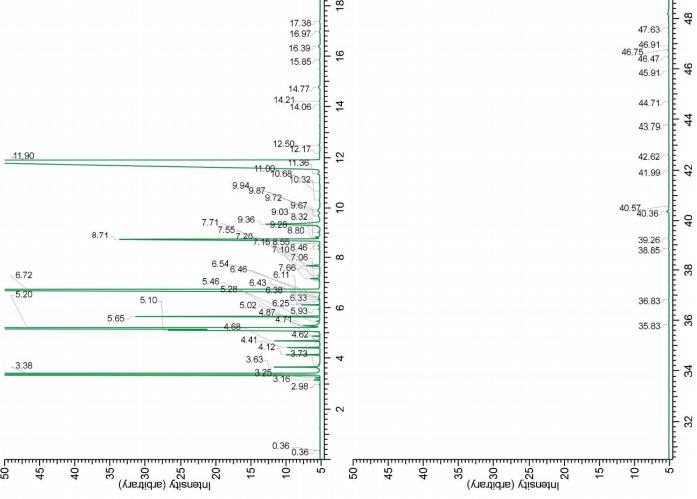
If you’ve been buying essential oils for a while, you’ve probably come across the rather cryptic acronym “GC/MS”. Some retailers will have this acronym as a link on their product pages, and if you click on it you’ll get a science-y looking chart that looks something like this:

Terrifying.

Or you might get a graph, which is also science-y and looks like this:

Even more terrifying.

Some places format the reports to make them more readable, and that’s a very nice thing, but this is the core of what we’re talking about when we say “GC/MS”: it’s a Gas Chromatography/Mass Spectrometry Report, or an in-depth analysis of the essential oil in question to determine its chemistry.

This is our first, and right now only easily accessible, line of defense against oil adulteration. It tells us what chemicals are in our oil so that we can blend using the therapeutic properties known to be caused by those chemicals, and to a lesser degree it tells us of the purity of our oil. Unfortunately, those who adulterate oils are canny and are frequently able to tweak the oils in ways that GC/MS can’t catch – but until more sophisticated testing is easily available, or until the government starts regulating the labeling of essential oil products, this is the most powerful tool we have to ensure that our lavender oil really is lavender oil, and nothing else.

One problem with GC/MS reports is that they are expensive. We’re talking multiple hundreds of dollars to test one sample of essential oil. This isn’t practical for those of us who buy our oils 10 milliliters at a time, but for companies who buy it by the gallon direct from the distiller the test isn’t a massive additional cost. It’s reasonable to expect that any company that’s selling essential oils should have each batch tested before they start selling it, and that they should make those test results available to potential buyers before purchase.

Why wouldn’t companies do that? Wouldn’t they want the customers to buy with confidence, knowing that the company is willing to back up their rhetoric with hard numbers? One would think so. But most companies don’t. Many retailers don’t mention GC/MS on their websites at all, and some claim to have the reports but aren’t willing to make them available to customers. Some post very official-looking documents, called things like “Certificate of Analysis” or “Safety Data Sheet” or whatever, which seem to put a lot of information in front of you but don’t actually give any clues about the chemical makeup of the oil.

This kind of manipulative marketing is little more than sleight of hand, and is one of the things that makes me really angry as an aromatherapist and as a consumer. Not only does it undermine the trust that should exist between customer and supplier, but it makes it impossible to know that the oil is as safe and therapeutically effective as it should be.

So now that you know what a GC/MS report is and why it matters, what do you do with that information? Easy. Only buy your oils from companies that supply you a GC/MS report to view before you buy the oil – here’s a link to my Resources page, with a list of suppliers who do exactly that. It may just feel like an act of good faith in the case of casual essential oil users (as opposed to aromatherapists who may be using the reports to check components for therapeutic blending), but it’s an important way to distinguish between good oils and ones containing random chemicals that that might give you a mystery rash.

Nobody wants a mystery rash.

The Scientific Holistic. Why, though?

Photo by Katharine Vary

I’ve been getting a lot of that question lately, since I fairly abruptly changed paths and started studying aromatherapy seriously several months ago. The question generally goes, “Oh, you’re an aromatherapist now! That’s … great. So, why?”

There are a lot of reasons. Personal reasons, like the feeling that I had been on the wrong path and that I’m meant to be a healer. Intellectual reasons, like a long-standing interest in science and medicine. Practical reasons, like the increasing demand for ‘all natural’ products and therapeutic treatments, and the career potential involved with meeting that demand.

But this blog. The Scientific Holistic. This is because of emotional reasons. This is because I spent so much time on the Internet before I got any formal training, learning all I could about essential oils. This is because during my training I would turn to the Internet for ideas and inspiration, for new products and combinations of scents.

This is because the Internet is TERRIBLE and finding out how awful it is made me MAD.

In my first few days studying aromatherapy, I had a lot of come-to-Jesus moments.

In those first few days, I learned that the essential oil industry is 100%, completely and utterly unregulated and that companies can put whatever they please into that little bottle and label it “pure”.

In those first few days, I threw away the vast majority of my essential oils and replaced them, since the ones that I had bought over the years may have been labelled “therapeutic grade” but, in fact, they had no documentation to back up the claim.

And in those first few days (probably least surprising but certainly disappointing), I found that 90% of the information I had read on the Internet about essential oils is just outright wrong. And boy, once you see that you cannot unsee it. Misinformation left, right, and center, a lot of it simply dumb but some of it wrong in ways that are actually unsafe.

So, “The Scientific Holistic. Why, though?” What happened is the universe took one woo energy healer who is fascinated with the science of plants, added a healthy dose of mad, stirred it around with a bit of snark, and this here blog was born.

My goal with this blog is to debunk as much of the misinformation surrounding the use of essential oils (and other non-Western healing modalities) as I can. To give my readers good resources and information, backed with whatever science can be found to support it. To help casual users of essential oils to make good purchases and good decisions, to keep their families safe and healthy.

It’s a work in progress, obviously. You can look forward to a reading list with books and resources that are grounded in solid science. There will be a page with links to trustworthy online retailers of essential oils. And there will be blog posts tearing apart sources of misinformation that I find on the Internet.

I’m still mad, after all.