
Every individual essential oil consists of many different chemical constituents, different molecules which in certain combinations create the scents that we know and love. Lavender oil, for example, has certain chemicals in it and not others, and we know what chemicals naturally occur in lavender and in what proportions. If there are other chemicals in there, or if the proportions are wrong, it isn’t lavender oil.

Unfortunately, you can’t tell what chemicals make up an oil just by smelling it or by looking at it. To keep with our example, lavender oil is one of the most frequently adulterated oils, with all sorts of things being put in there to tweak its scent or reduce its cost. The whole idea of the adulteration is to make it seem exactly the way the customer expects it to be, while maintaining a high profit margin. So adulterated lavender will probably look and smell just wonderful, even though it is not actually, chemically, lavender.
Remember, there are currently no laws or regulatory agencies ensuring that essential oils meet any kind of standards. None. It’s the Wild West up in here.
So how do you know that the oil you’re buying is actually lavender, with all its therapeutic properties and no extra safety considerations due to unknown mystery chemicals?
If you’ve been buying essential oils for a while, you’ve probably come across the rather cryptic acronym “GC/MS”. Some retailers will have this acronym as a link on their product pages, and if you click on it you’ll get a science-y looking chart that looks something like this:

Or you might get a graph, which is also science-y and looks like this:
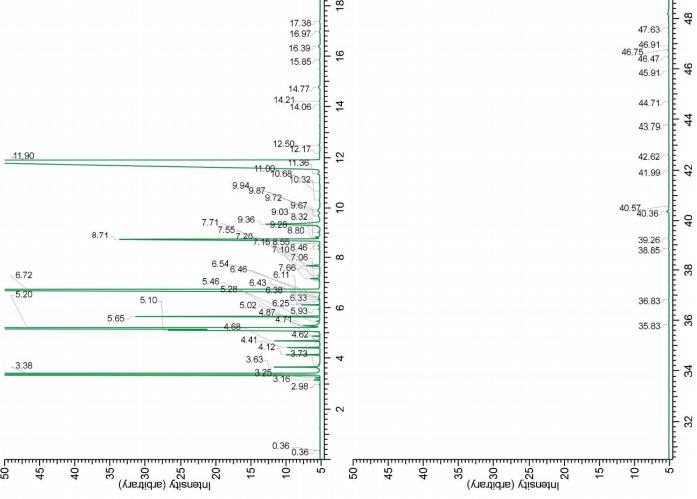
Some places format the reports to make them more readable, and that’s a very nice thing, but this is the core of what we’re talking about when we say “GC/MS”: it’s a Gas Chromatography/Mass Spectrometry Report, or an in-depth analysis of the essential oil in question to determine its chemistry.
This is our first, and right now only easily accessible, line of defense against oil adulteration. It tells us what chemicals are in our oil so that we can blend using the therapeutic properties known to be caused by those chemicals, and to a lesser degree it tells us of the purity of our oil. Unfortunately, those who adulterate oils are canny and are frequently able to tweak the oils in ways that GC/MS can’t catch – but until more sophisticated testing is easily available, or until the government starts regulating the labeling of essential oil products, this is the most powerful tool we have to ensure that our lavender oil really is lavender oil, and nothing else.
One problem with GC/MS reports is that they are expensive. We’re talking multiple hundreds of dollars to test one sample of essential oil. This isn’t practical for those of us who buy our oils 10 milliliters at a time, but for companies who buy it by the gallon direct from the distiller the test isn’t a massive additional cost. It’s reasonable to expect that any company that’s selling essential oils should have each batch tested before they start selling it, and that they should make those test results available to potential buyers before purchase.
Why wouldn’t companies do that? Wouldn’t they want the customers to buy with confidence, knowing that the company is willing to back up their rhetoric with hard numbers? One would think so. But most companies don’t. Many retailers don’t mention GC/MS on their websites at all, and some claim to have the reports but aren’t willing to make them available to customers. Some post very official-looking documents, called things like “Certificate of Analysis” or “Safety Data Sheet” or whatever, which seem to put a lot of information in front of you but don’t actually give any clues about the chemical makeup of the oil.
This kind of manipulative marketing is little more than sleight of hand, and is one of the things that makes me really angry as an aromatherapist and as a consumer. Not only does it undermine the trust that should exist between customer and supplier, but it makes it impossible to know that the oil is as safe and therapeutically effective as it should be.
So now that you know what a GC/MS report is and why it matters, what do you do with that information? Easy. Only buy your oils from companies that supply you a GC/MS report to view before you buy the oil – here’s a link to my Resources page, with a list of suppliers who do exactly that. It may just feel like an act of good faith in the case of casual essential oil users (as opposed to aromatherapists who may be using the reports to check components for therapeutic blending), but it’s an important way to distinguish between good oils and ones containing random chemicals that that might give you a mystery rash.
Nobody wants a mystery rash.
 The Scientific Holistic